Waiting Through Quicksand
“Humble yourselves, therefore, under the mighty hand of God so that at the proper time he may exalt you, casting all your anxieties on him, because he cares for you… knowing that the same kinds of suffering are being experienced by your brotherhood throughout the world. And after you have suffered a little while, the God of all grace, who has called you to his eternal glory in Christ, will himself restore, confirm, strengthen, and establish you.”
1 Peter 5:6–10 (ESV)“I’m afraid it will never go away,” the young mentee blurted out. “I know God is with me…I know He is faithful….” She rushed on, breathlessly trying to recite as many truisms as possible before giving her mentor a chance to speak. “I am blessed…. I’ve been doing better!… Why am I still anxious?…I should be more grateful…more patient...more humble...”
I twisted and squirmed in my seat nearby at the coffeehouse counter, recognizing myself in the younger woman’s anguish. I wanted to drown out her conversation - it made me anxious! I also wanted to tell her that trying to overcome anxiety by dwelling on it is like jumping into quicksand with a ball and chain.
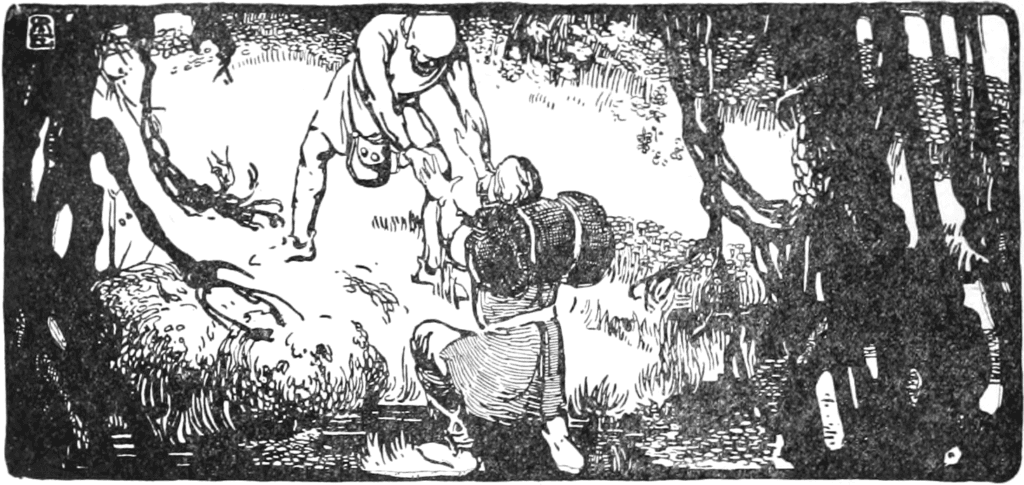
In one of my favorite old books, The Pilgrim’s Progress, a desperate traveler finds himself sliding into emotional misery because of the burden of his wrongdoing and his fear and doubt about ever getting rid of it. This sinking pilgrim (Christian is his name) could not escape from a gloomy swamp of despair until a friend named Help came and pulled him out with God’s Word. (Isaiah 35:3,4 KJV).
I suspect the young woman I overheard fretting at the café needs a helpful friend like Christian's and a word of heavenly encouragement sometimes. So do I! We both want freedom from our chains of sin and doubt. But we mull over them anyway, cling to them, wrap ourselves in them, and we stay stuck.
How the devil must enjoy our predicament! As long as we stay occupied with our wrongs and our worries, we are just thrashing away in quicksand, sinking deeper into discouragement and confusion. Soon enough, we may find ourselves doubting our destiny, questioning our calling, and disbelieving our King. It’s a very short slide from self-conscious to self-defeating. But all the while, the Lord would have us take our eyes off ourselves and receive His help and His promises with uncomplicated gladness! His victory, not ours, will set us free.
His victory, not ours, will set us free.
He is the one who overcomes all. (John 16:33)
He is the one who understands all. (Hebrews 4:15)
He is the one who conquers all. (Romans 8:37)
He is the one who always completes His purpose. (Isaiah 46:10)
With a Helper who does all of that, I don’t need to do it myself. The sooner I can let go of my need to claim victory for myself over the source of my anxiety, the sooner my feet will find the strong foundation of Christ’s victory on my behalf, and I can go on my way celebrating with thanks and praise.
It is common to think of our troubles as specialized tests we must prepare for, pass, and then review out loud for extra credit. Anxious people are resistant to moving on from anything before we've considered it from every angle. We often presume that each adversity or temptation we face is assigned specifically to us for grand conquest along life’s journey, and that our journey is stalled until we get all the goody out of it, spiritually speaking. This creates an impression that full repentance calls for complete understanding. It gives a sense that God's purposes are set in motion chiefly to be discovered and interpreted by us. It persuades us that our advancement in His kingdom is dependent on our insight. And, it encourages us to take unwarranted pride in the circumstances we’ve lived through, rather than giving praise to God in all things, good times and bad.
The Apostle Peter knew better than to dramatize simple trust and obedience into a personal obstacle course. He had learned from experience not to place much confidence in his own ability to see the big picture of God’s plan. (Matthew 16:21-2, Mark 14, Jn18.10). In 1 Peter 5:6-10, he wrote that all our anxieties should be simply “cast” on the Lord – not fed, not parlayed, not analyzed, just cast off. Peter thought it comforting, not belittling, that “the same kinds of suffering are being experienced by your brotherhood around the world.” That sameness zaps the specialness right out of our troubles doesn’t it? But Peter was not making fun of his friends or dismissing their sorrows; actually, he wanted to offer encouragement that they were not alone in their trouble, however personal the sorrows might be.
This is a beautiful example for the Church today! Peter didn’t admonish his readers that their afflictions must be fully understood to be used for God’s glory, and we must not add that burden to our trials, either. Peter didn’t say that God waits for us to get to the bottom of issues before we can be set free from them. He believed God has already called us “to His eternal glory in Christ,” whether we ever grasp the full significance of our troubles or not! “And after you have suffered a little while,” he wrote, God “will Himself restore, confirm, strengthen, and establish you.” He didn’t say "after you have cracked the code" or "after you have achieved personal growth" or "after you level-up in righteousness" God will show up. Peter’s words reassure us that after just "a little while," our Savior Himself will deliver us, for His own purpose and in His good timing.
Think of the simplest person you know. Is she a child, or someone who has lived humbly for a very long time? Is he a person whose mental or physical challenges foreclose certain educational and career options and compel him to live a plain or dependent life? Now, consider whether God’s grace is available to that person. Ask yourself whether the God you serve and adore requires the person you have in mind to solve all of the riddles of their situation before He will help them or forgive them or guide them. If you have known this person long enough, I suspect you have seen God’s provision in their life, in spite of its challenges. So it is with each of us. We need not fret over our lack of understanding. We need not despair over our weaknesses. We simply, humbly, in childlike dependence, cast our cares on Him.
The common remedy for actual quicksand can help illustrate this. To survive and escape real quicksand, a person must make herself as light as possible, step backward if she can, raise her arms and keep them out of the muck, and then reach for a hand or strong branch to pull her out. Likewise, those of us facing anxiety must lighten our own loads by resisting the temptation to dwell on our trouble or our failures to overcome it. Next, we must step back from any sin and confide our worries to Jesus - this is a critical step; no one would advise a person stuck in quicksand to keep walking further into it. Then, we simply raise our arms in praise and reach for His word and His Spirit to give us the strong branch of Truth. And we wait.
He will not let us fall.
He will not let us be made ashamed.
He will reassure us that we belong to Him.
He will guard us while we are waiting.
As a person who has struggled against anxiety in various forms for most of my life, I know this advice to watch and wait is easier given than practiced. Believe me, if I had a fool-proof preventative for anxiety, the story of my life would look much different! I can't claim to have mastered the secret for being free from suffocating fear and self-doubt. But that is just the point. I don't have to discover any secrets. And you don't either. Quicksand will appear in our paths. Opportunities to look down at our failures instead of up to our Father will suck us in, if we let them. Our enemy desires to keep us stuck, imagining that we are improving ourselves, when true progress is lighthearted mobility.
Peter teaches us, and all of Scripture reminds us, to lift our eyes heavenward when we are afraid, worried, anxious, weary, angry, hurt, rejected, jealous, guilty, discontented, confused, or lost. Getting to the bottom of our suffering may appeal to a certain sense of achievement or worthiness or perceived duty, but it is a trap that keeps us swamped. To get over the muddy bog of anxiety, all we really need to know is a person, a Savior, who can sort out the whys and hows and wherefores and lead us into all Truth. (John 16:13)
Looking back at the story of Christian in the Pilgrim's Progress, Help tells his new friend that the swamp he got stuck in has been back-filled with "millions of wholesome instructions" over many years to sop up the bog, but it continues to trap passersby. I suspect the young woman at the coffee shop can relate to that, as I can. How many well-meaning reassurances have we heard and how many very good ideas have we tried, to master the racing thoughts and unrelenting dread in our hearts? Still, anxiety returns and we are sucked in again. Tidy answers to life’s sticky problems feel empowering for a moment, but it’s easy to lose our grip and fall back into fear and doubt when we can’t control all of the outcomes.
Here is The Way out: God’s Word has always been the help that His servants need to persevere through our troubles. He delivers it to us in Scripture and through prayer, but also from the mouths and hands of our brothers and sisters in Christ. Look where God’s Word is, and you will find help. (Matthew 11:29) Waste no time puzzling over whether you should feel anxious or lonely or ashamed. Don’t feed those treacherous feelings by trying to figure out whether you deserve them - none of us has deserved a pain-free journey, to tell the truth. Just cast them onto the Lord in prayer as soon as they begin to swallow you up, and then begin to pour His Word over yourself for healing, revelation, and forgiveness. Allow it to soak up the swamp around you!
Anxiety is like a poison to our souls; we shouldn’t sniff at or taste test poison, we should pour it down the drain! In the same way, we should not stare at sin or sickness for long, we should turn from it. I think Peter would tell us, we have nothing to gain from self-evaluating our spiritual progress, but we have freedom and joy to gain by casting our worry and shame on Jesus and waiting to see how He leads us to higher ground, for His glory. Author C.S. Lewis once admonished a friend, “…you write much about your own sins. Beware . . . lest humility should pass over into anxiety or sadness.” Couldn’t faith like Peter's free us from feeling anxious about our anxieties?
Our Help is sure to come; waiting on Him in His Word – not wading in our worry – is true, solid ground. When we find ourselves in quicksand, getting to the bottom of it is best avoided. So let’s stop wading in.
0 Comments
Leave a Comment
Sign in to leave a comment.